
Voices of Gen Zs at the Workplace – Lessons from the Other Side of the Desk
At BCFAI, our blogs are more than words on a page. They are our way of giving
ideas a voice and reflections a shape. They extend beyond classrooms and
boardrooms, offering a personal lens on our collective experiences.
This year feels extra special! Our Fireside Chat Series – “Mind the Gap:
Academia and Industry in Conversation” has sparked thought-provoking
dialogues on how classrooms connect to careers, how skills evolve, and how
learning meets real-life challenges.
But the conversation doesn’t stop there. Our blogs keep the flame alive, a space
where students, educators, and industry voices come together to share stories,
insights, and reflections. Each post adds a fresh spark to one big question: What
does it really take to be future-ready?
We’re excited to share a new blog inspired by the series — “Voices of Gen Zs at
the Workplace” by Vanshika Pareek, a candid and relatable narration of how a
young professional created her own playbook, learning and adapting on the go.
-Jayasree Menon, Blog Coordinator
Thrown into the deep end without a life jacket, I faced a world where training was a whisper, not a guide. With no map and all eyes watching, I stumbled, learned, and fought to find my voice. This is the raw truth of a Gen Zer’s fight to belong at work.
Walking into my first real workplace felt like opening the door to a world I had
only seen in passing. No, there weren’t neatly stacked training manuals waiting for
me, and no one handed me a “how to fit in at work” guide. It was a sink-or-swim
moment only instead of sinking, I dog-paddled my way through.
I didn’t undergo any formal training, which, at first, felt liberating. I thought,
“Great, no boring PowerPoint sessions.” But soon I realised that training isn’t
about sitting in a conference room listening to someone drone on; it’s about having
a soft landing when you enter a space where everyone else already knows the
unspoken rules. The lack of structured onboarding meant that I learned by
observing watching how seniors spoke to each other, how they responded to
emails, how they balanced deadlines without snapping in frustration.
One of the workplace’s biggest strengths was the way people trusted me with real
tasks right from the start. As a Gen Z, I crave purpose not just busywork and being
handed responsibilities that actually mattered felt empowering. There was no hand-
holding, but there was faith that I could figure things out. That trust pushed me to
research, to ask better questions, and to deliver work that I was proud of.
But here’s where the flip side shows up. Without proper training, I sometimes spent
twice the time on a task simply because I didn’t know the shortcuts, the preferred
formats, or the right point of contact. It wasn’t about intelligence; it was about
access to know-how. I often wished there was a simple crash course on “How We
Do Things Here” not just for processes, but for culture. How do you handle
feedback? What’s the tone of internal communication? What’s considered “urgent”
here? Those small details can make a huge difference in how quickly a newcomer
adapts.
One thing I would have loved to learn early on was navigating professional
boundaries. As Gen Z, we are used to blurred lines, school friends are Instagram
mutuals, and mentors can be people we text at 11 p.m. But the workplace has its
own rhythm. Sometimes I overexplained myself in emails, thinking it would make
me look conscientious, when in reality, brevity was valued more.
What surprised me most was how much learning happened outside “official” work.
In casual tea breaks, I picked up on negotiation tactics, crisis-handling skills, and
even small leadership moves like how to calm a heated discussion without making
it obvious. This was workplace coaching in its rawest form: learning by proximity,
by absorbing the invisible curriculum of how things get done.
If there’s one message I’d give educators, trainers, and workplace mentors, it’s this
Gen Z doesn’t just want training; we want relevant, experience-based guidance. We
don’t want to be overloaded with theory that never touches our day-to-day reality.
We want someone to tell us, “Here’s what you’re going to face, and here’s how we
deal with it here.” It’s not about hand-holding; it’s about giving us the map before
we start exploring.
Looking back, my workplace didn’t teach me in the traditional sense. But it trained
me resilience, problem-solving, and the art of figuring things out when answers
weren’t served on a platter. It wasn’t perfect and that’s exactly why I learned so
much. Because for Gen Z, every gap in training is also an opportunity to create our
own playbook for how we want to work, lead, and teach the generations that
follow.
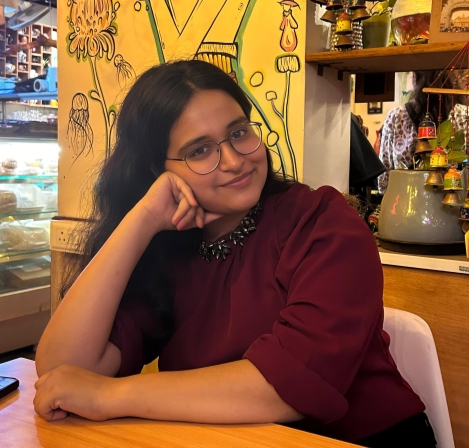
Vanshika Pareek is a 2nd year student of Journalism at SCMC Pune, passionate about news, writing, and storytelling. She enjoys exploring culture, media, and the
world of ideas through words. With curiosity and creativity, she aspires to tell stories that inform, inspire, and connect people, while constantly learning from the
ever-changing landscape of journalism and media.


Comments